Ballycastle sits at a genuine crossroads — the coast runs both directions from the town, and the Glens of Antrim open up inland. Three routes cover most of what’s worth seeing.
North: the ferries
From the marina, ferries run to Rathlin Island and, seasonally, to Campbeltown on the Mull of Kintyre. If diving or deep-sea fishing is more your speed, the waters around here hold over a hundred shipwrecks.
West: the Causeway Coast
Heading west on the B15 (Whitepark Road), the first stop is Kinbane Castle and Headland, with views over Carrickamanon Rock to Rathlin, Fair Head, Islay, and the Mull of Kintyre. A little further on, Portaneevy Viewpoint is a good picnic stop with sight of Carrick-a-Rede Rope Bridge and Sheep Island, before Ballintoy itself.
Continue on to Whitepark Bay and Portbraddan — home to Ireland’s smallest church — then turn onto the B146 for Dunseverick, where the castle stands on its crag above a working harbour. From there it’s on to the Giant’s Causeway, then Bushmills (famous for its whiskey distillery), before the coast road winds round to Dunluce Castle and finally Portrush.
East: the Glens of Antrim
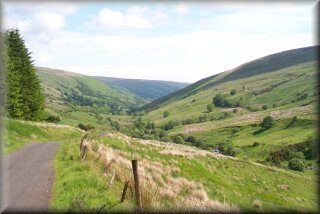
From the Diamond, up Castle Street and along Glentaisie Drive gives a good view down Glentaisie, past the old round tower at Armoy, and back into town via Glenshesk.
For Murlough Bay, turn off the Cushendall Road at Maguire’s Strand Caravan Park and park near Marconi’s Cottage to walk over Fair Head. The coast road from there continues past Fair Head car park, on to Torr Head, and into Cushendun.
The inland alternative passes Watertop Farm and Ballypatrick Forest, alongside Loughareema, before dropping into Glendun — worth stopping regularly for the views back down the glen, and passing Craigagh Churchyard, the Gloonan Stone, and St. Patrick’s Well on the way. At the top of the glen, a detour down Glenaan passes Oisín’s Grave, a court tomb dated to around 3800 BC and marked since 1989 by a stone cairn to the Glens poet John Hewitt, before rejoining the coast at Cushendall — arriving at the Curfew Tower, with Layd Old Church just beyond.
South from Cushendall, the coast road passes under the Red Bay Arch — look up at the cliff face for the old cave dwellings, including “Nanny’s Cave,” once home to Anne Murray, who supported herself there by knitting, spinning, and selling poitín — before entering Glenariff, the “Queen of the Glens.” The A43 climbs the glen past Altnagowna waterfall, known as the Grey Mare’s Tail and the tallest waterfall in Glenariff, before the coast road continues through Carnlough and on to Glenarm.